Nioh 3 Review: A Fundamental Shift for the Souls-Like Genre
We're here with another exciting piece of content, this time a Nioh 3 Review. I can confidently say that this game offers a completely different experience from other Souls-Like games, and you should prepare yourself for a game unlike what you might have in mind.
The first Nioh game was released in 2017 and was recognized even then as one of the best Souls-Like games. Its thrilling combat and challenging bosses dared every player to fight. Nioh 2, released three years later by Team Ninja (Note: corrected from "FromSoftware" - the developer is Team Ninja), was, to be honest, essentially Nioh 1 with fixes to its problems; we saw a better version of the first game but with the same systems and mechanics. However, Nioh 3 is more than just a trilogy sequel;

We are witnessing a complete transformation in this game compared to its predecessors. Changes in combat systems and extensive performance improvements have breathed new life into the Nioh series.
A Persistent Problem in Nioh 3
Despite the wide-ranging changes implemented in Nioh 3, the problem of storytelling still persists. This has always been one of the weakest aspects of this series.
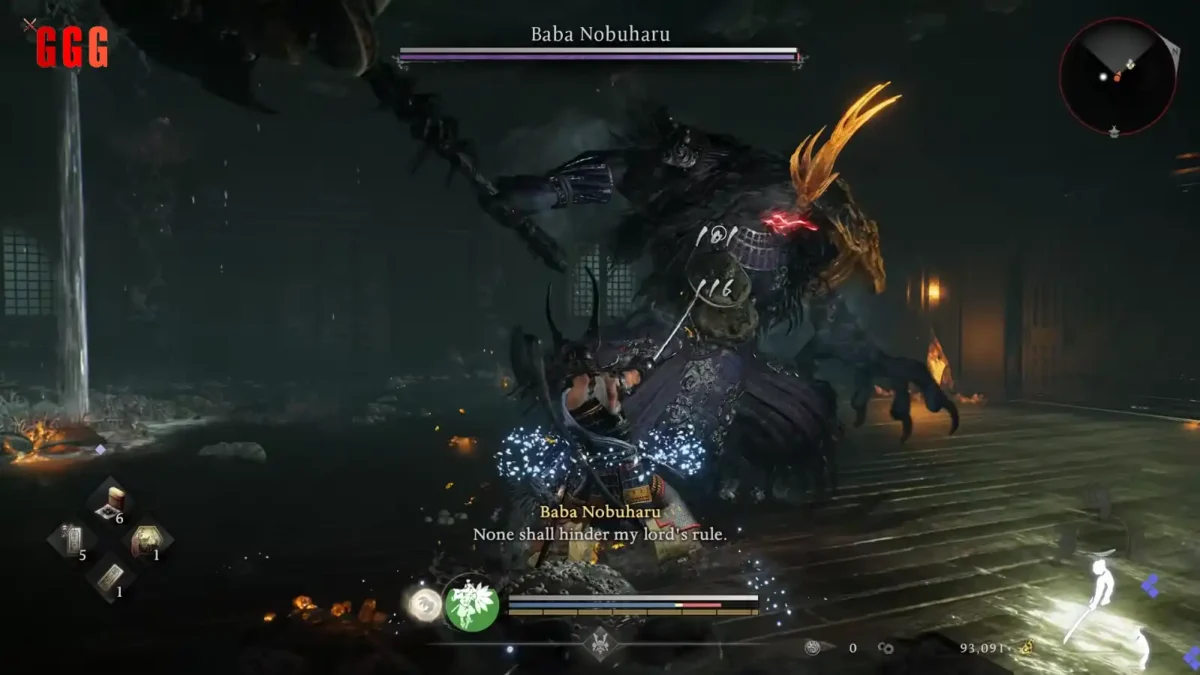
This time, you must travel to the past to destroy an ancient evil that has affected the present. The problem is that the story is intensely dull and monotonous. If you are familiar with Japanese history, it might be engaging for you. Otherwise, you'll face a lack of character development and won't be able to properly connect with the game's storyline.
In Nioh 3, you travel to different periods of Japanese history, such as Edo, Heian, and Bakumatsu. This in itself holds great potential for the game, but the storytelling hasn't been able to utilize this setting effectively.
Revolutionary Combat Mechanics for the Souls-Like Genre
I can confidently say that Nioh 3 could be the premier Souls-Like game in terms of combat mechanics. Diverse weapons with appealing designs and unique mechanics for each, the use of AI to create challenging enemies—all of these place this game at least a step ahead of its competitors.
The peak of the game's appeal is the use of two combat systems: Samurai and Ninja.
Samurai Combat System:
In the Samurai combat system, you encounter mechanics from the previous Nioh games. It essentially has several core mechanics:
Precise resource management through Ki Pulse stamina recovery.
Switching between low, medium, and high stances based on engagement needs.
Balancing defensive techniques with offensive aggression.
Strategic timing and positioning.
Ninja Combat System:
This is the newest combat style added to Nioh 3, offering a completely fresh experience. Faster, more agile attacks that consume less stamina. This system multiplies the game's appeal, allowing you to engage in more spectacular moves with your enemies and defeat them. Advantages of the Ninja combat mechanic include:
Access to major tools like shuriken, traps, and ninjutsu magic.
Abilities that recharge as you land attacks.
Excellent for targeting enemy weak points or eliminating annoying flying enemies.
Superior mobility and quickstep dodges.
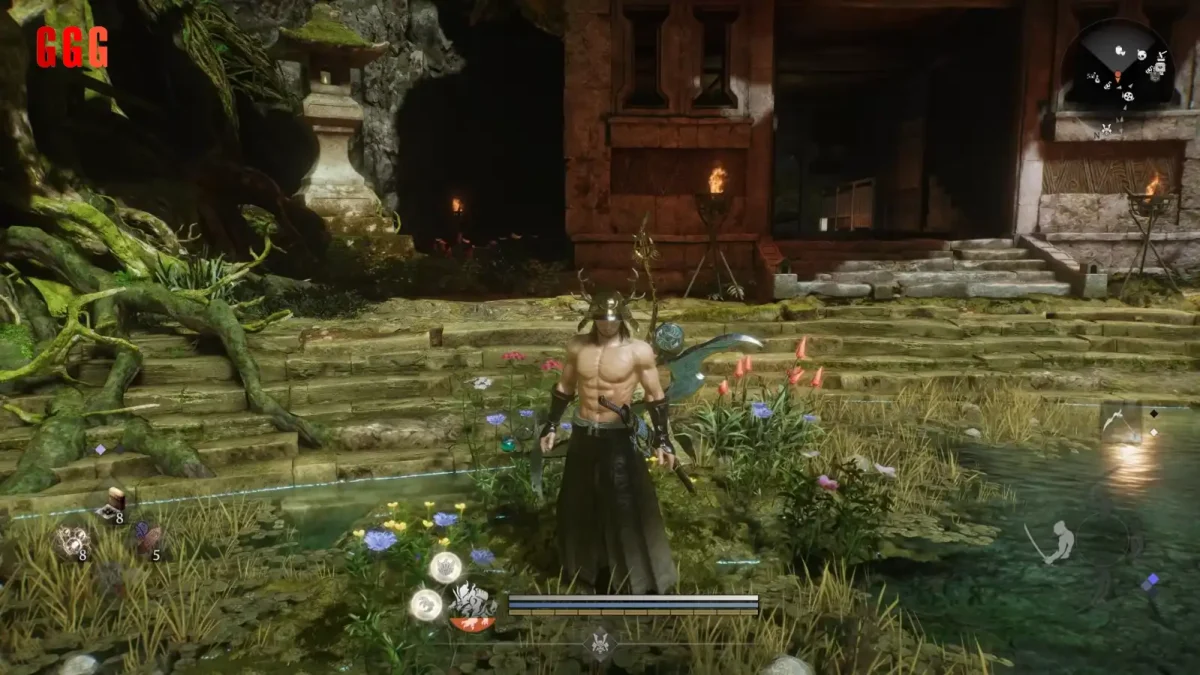
The Dual Stances System
What makes the gameplay and combat experience more exciting is the ability to instantly switch between the two combat systems: Samurai and Ninja. Each has its own specific gear set, allowing you to essentially have two completely different characters in the game. The Dual Stances system in Nioh 3 gives you more freedom to defeat various bosses and offers greater flexibility.
Throughout the game, you can change your combat style at your own discretion: use Ninja for bosses requiring more agility, and Samurai for those needing more raw power. The development team's artistry lies in creating an impeccable balance between these two distinct styles, completely discarding the limitations seen in similar games.
Nioh 3's Open World
The biggest difference of this third installment from the first and second games is that you must complete your missions in Open World maps. Throughout the campaign, which lasts over 40 hours, you travel to different historical periods. Each period features expansive spaces and engaging battlefields where you can explore and adventure.
The Game's Reward System
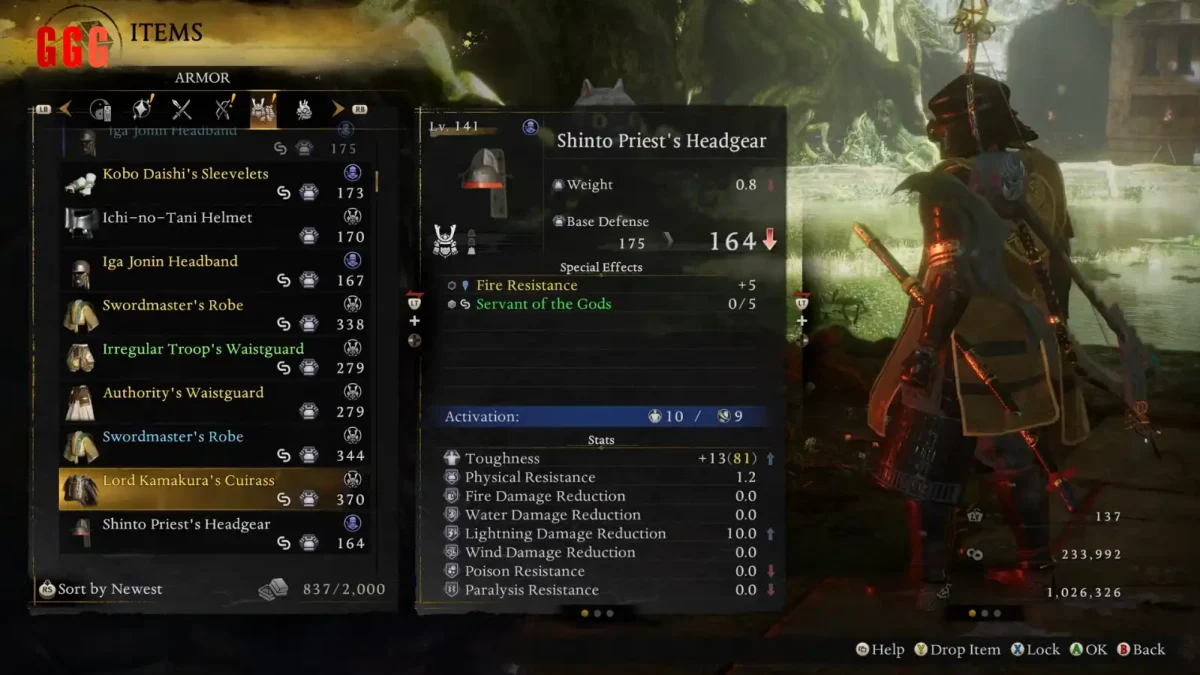
In previous installments, we saw a reward system that, due to random loot drops, couldn't satisfy many players. In the third game, Nioh has made some changes to it, although the random element still exists, but with modifications:
Clearing smaller shrines empowers your guardian spirit and unlocks new spirit skills.
Defeating masters unlocks new nodes on specific weapon skill trees.
Finding Jizo statues enables choosing from various bonuses that assist you at shrines.
Shooting down demonic Ginkgo creatures (weasel-like) from the sky grants elemental variations to techniques.
Discovering scattered skills throughout the world.
The return of collectible Kodama and Sudama items.
The Problem of Repetitive Enemies:
When you play through different periods of Japanese history, you expect to encounter varied and diverse enemies. However, the problem is that the same enemies and mechanics are repeated excessively in the game.
This means if you encounter an enemy in the Warring States period, you'll encounter the same enemy again in the Heian period. This issue existed in previous games, but it manifests more in the open-world format.
Nioh 3's Difficulty Level
I can confidently say Nioh 3 is one of the hardest games in the Souls-Like genre. Enemies and bosses relentlessly attack you with tough, heavy mechanics, requiring your full attention to all details and movements, especially managing your stamina meticulously.
This very difficulty is what makes the game so engaging and exciting. The checkpoint challenges, various shortcuts, and, most importantly, the low and fast loading times prevent you from ever getting bored with the game.
But from now on, you must prepare yourself to die—and die a lot.
The Auto-Equip System
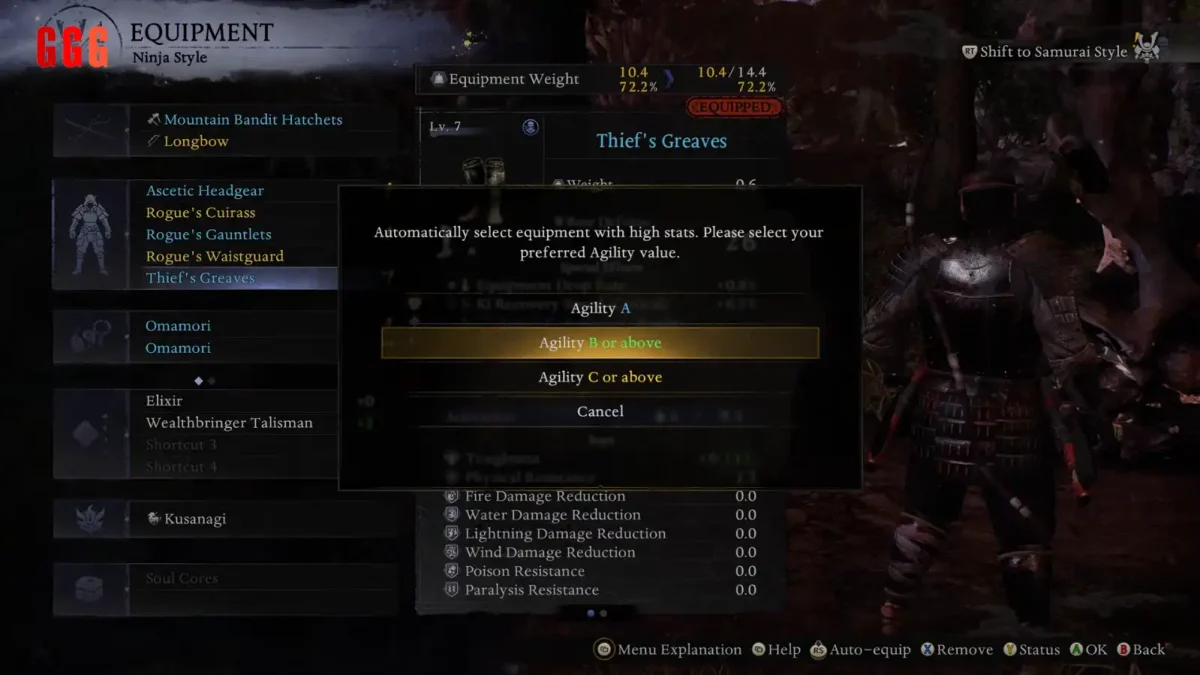
Thankfully, there's now an auto-equip feature allowing you to quickly equip the most powerful gear with a button press. You can set it to automatically equip based on weight—prioritizing heavy gear if you don't care about dodge invulnerability frames, balancing good gear with good dodges, or equipping the best gear that still allows fast movement even if it leaves slots empty.
Auto-equipping has limitations—it doesn't consider build-defining special effects or set bonuses—but it dramatically reduces menu time without penalizing players who enjoy meticulously fine-tuning builds.
Nioh 3 Review: Final Verdict
The high difficulty, combined with visual appeal and the excitement of Nioh 3's combat system, makes it one of the top games in the Souls-Like genre. Its strengths are so significant that they overshadow the minor criticisms. If you are a fan of this game genre, I promise you are about to experience something very different and unique.